The river is a rule, not a wall
A soldier gains choices. An elephant keeps its limits. Discover how one line changes a piece’s choices.
On this page
A board with geography
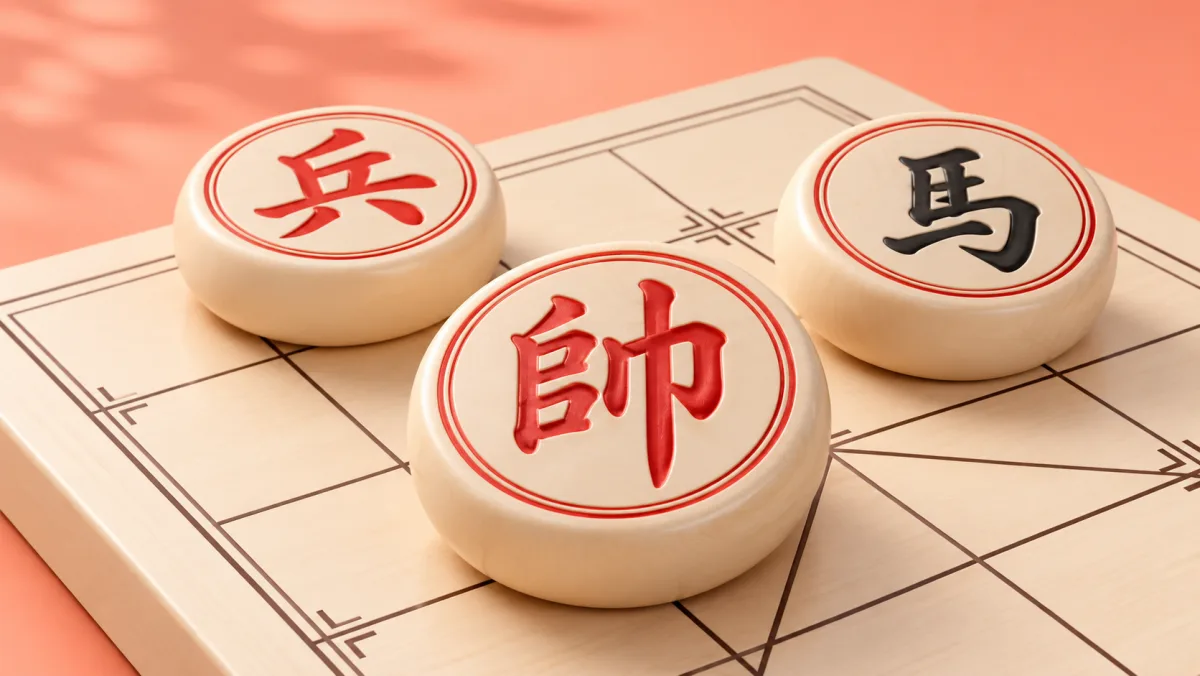
On a chessboard, an empty line can change the meaning of a move. Xiangqi puts a river between its fifth and sixth ranks and a palace at each end. The river is not an obstacle for every piece: a chariot can travel across it along an open file. The useful question is not “can pieces cross?” but “which piece is moving?” This distinction is why treating all the pieces like western chess pieces leads to mistakes.
One soldier, two different positions
Use our board coordinates: letters A–I run left to right, and ranks 1–10 run from top to bottom. Red moves toward smaller rank numbers. A red soldier at C7 can step to C6, but not to B7 or D7. Put that same soldier at C5 and a sideways step becomes legal. It still cannot retreat. In the soldier lesson, try C5–D5, undo it, and compare the highlighted destinations. Compare both positions to see how crossing the river changes the choices.
Try the matching board lesson, then return to your reading.
Open the practice boardProtect your general before moving
A soldier at E6 can be the only piece separating the two generals. Moving it sideways would open a clear file between them, which is not allowed. Before moving any piece, inspect your own general: will the move expose it to the opponent? Highlighted destinations show where a piece may legally move. Choosing among them means also looking at what your opponent can do next.
The palace shapes attack and defense
The general moves one point horizontally or vertically within its palace; advisors move one point diagonally there. These boundaries turn the palace into a compact space where every route matters. Try the advisor and general lessons, then open a one-move ending. Identify the attacking line, the possible escape points and the friendly pieces that cover them. Return to the river-crossing soldier: its sideways step can now help close an escape route.
A correction is welcome. Include the section and the source you would like us to check. Contact the editor ↗